
Windows 11 already delivers system alerts beyond simple pop-ups, using watermarks, notifications, and background checks to communicate status. As screens multiply around us, these messages are no longer limited to a single monitor. They are starting to follow users across devices, from tablets to mixed-reality headsets.
Today, most people notice activation warnings at the corner of a desktop screen. Many search forums for fixes, including threads on Reddit, where users share advice about keys, accounts, and reinstallations. That habit hints at something bigger. System messages are becoming part of daily digital life, and future hardware will decide how and where they appear.
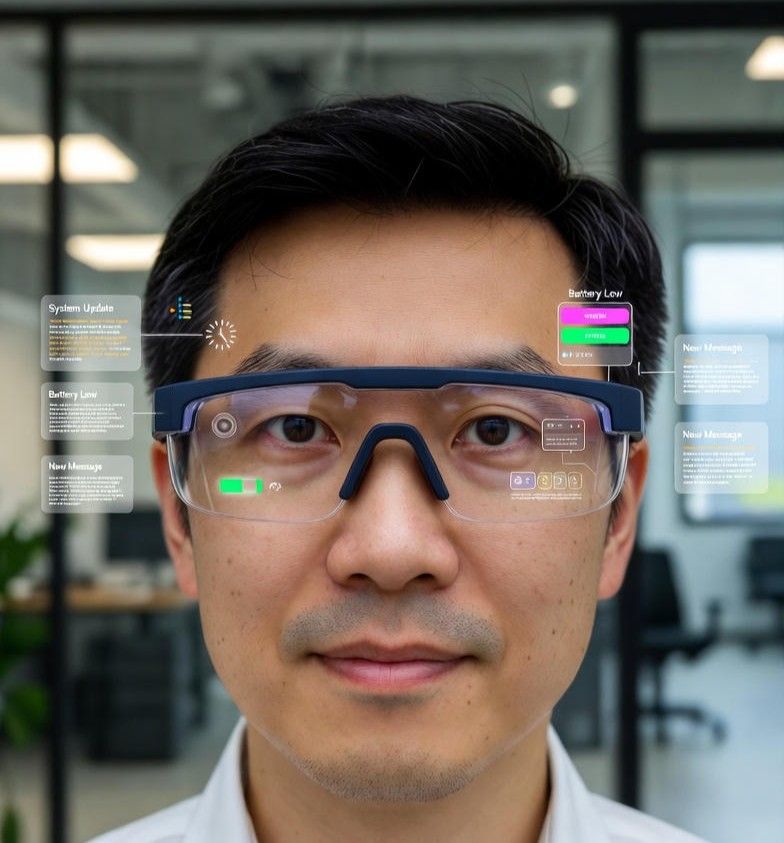
Smart glasses and AR displays are designed to extend screens into physical space. Instead of checking a taskbar, users glance at floating panels or subtle overlays. In that environment, a Windows activation watermark would not sit at the bottom-right of a monitor. It could appear as a translucent reminder in the user’s field of view, anchored to a virtual workspace.
This shift changes how alerts feel. A watermark on a monitor is easy to ignore after a while. A notification hovering near a document or app window feels more personal. It becomes part of the environment, not just the screen. Microsoft already experiments with adaptive notifications in Windows 11. AR hardware would push that idea further.
In a mixed-reality setup, Windows alerts could behave like spatial objects. An activation reminder might follow a virtual desktop or fade in only when system settings are opened. This approach respects focus. It avoids constant distractions while keeping the message visible when it matters.
Wearable tech also allows context. If a user is gaming in AR, activation warnings could stay hidden. When switching to productivity mode, they reappear. This mirrors how Windows already prioritizes alerts based on activity, but AR gives it physical presence.
Comfort matters with wearables. Persistent warnings in a headset could feel intrusive faster than on a flat screen. That pressure forces better design. Activation messages would need softer visuals, clear timing, and easy dismissal. Transparency and size become tools, not just style choices.
Community discussions, including repeated references on Reddit, show that users care deeply about how these messages affect daily use. Translating that feedback into AR design could improve trust and usability.
Windows 11 activation already relies on cloud verification tied to hardware and Microsoft accounts. Smart glasses connected to the same account could reflect activation status instantly. Log in on a headset, and the system knows whether the linked PC is activated.
This opens new ideas. A user setting up a virtual desktop on AR glasses could see system status before launching apps. Activation warnings would appear early, reducing confusion. It feels less like an error and more like a status indicator.
AR notifications are not about flashy tech. They change habits. When system messages follow users across devices, they become harder to miss but easier to understand. Clear placement and timing reduce frustration.
For Microsoft, this evolution keeps Windows relevant in a world where screens are everywhere. For users, it means fewer surprises. Activation reminders stop feeling like random nags and start acting like part of a shared environment.
READ ALSO: Through the Lens: How AR Smart Glasses Could Transform Reddit Engagement
Smart glasses are still early, but their direction is clear. Operating systems will adapt. Windows activation warnings, once static text on a monitor, may soon appear as gentle cues in augmented space. People will expect system status to travel with them.
As discussions on Reddit continue and AR hardware improves, these ideas move closer to reality. The next time a user notices an activation message, it might be floating quietly beside a virtual screen, reminding them that even basic system alerts evolve with technology.